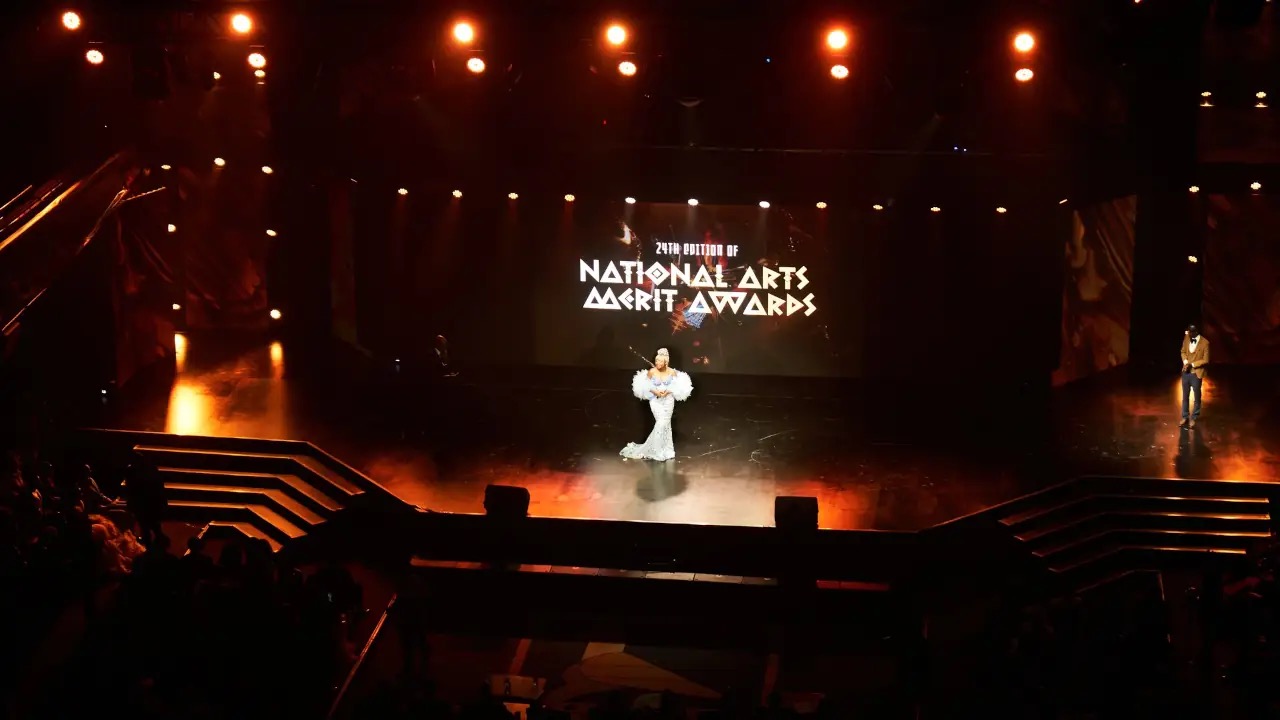
The 24th National Arts Merit Awards happened on 28 February at the HICC, with more than two thousand submissions and a theme printed on every banner in the room: Fearless Creativity.
I am going to be brutal about this, because somebody who actually makes music in this country should be, and the polite arts-page writers will not. The single most fearless thing the National Arts Council did all night was choose that theme. Everything after it was a careful, well-catered retreat from the word.
Let me show you exactly how.
The Theme Is the Punchline
The bravest song released in Zimbabwe in the eligible period was Winky D's "Siya." Not the catchiest, the bravest. It topped the charts while saying things the powerful did not want said. And when the nominations for Outstanding Song came out, "Siya" was simply not there. Not beaten. Not present. Erased from the category at the awards show themed Fearless Creativity.
You cannot write satire this clean. An institution branded the night around fearlessness and then could not locate room on a ballot for the most fearless record in the country. That is not an oversight. An oversight is forgetting a name. This was a chart-topper vanishing from the one category built to honour exactly what it did. As I argued in the Two Kings piece, Zimbabwe forces its artists to choose between the truth and the airwaves. NAMA 2026 just confirmed the awards are on the airwaves' side.
The AI Video Farce
Here is where it stops being sad and starts being absurd.
Winky D did win Outstanding Video, for "Fake Love." That video was largely generated by artificial intelligence. It beat human-made productions like "Kuno" and "Nguva Ndeya Mwari," real shoots, real crews, real Zimbabweans who needed the cheque.
Sit with the full picture. The same jury that could not find space for Winky D's human protest song handed a trophy to Winky D's machine-made video. They had no room for the message and a red carpet for the algorithm. In a country where videographers, gaffers, editors and dancers are starving, the premier state arts body looked at a category full of human labour and crowned the one entry that employed almost none of it. They will honour the robot. They just will not honour the man when he says something true.
If you wanted a single image for the state of institutional arts in Zimbabwe in 2026, it is that: the protest song deleted, the AI video garlanded, both by the same panel, in the same night, under the same word, Fearless.
When Your Biggest Star Rejects Your Jury
Winky D reportedly rejected the 2026 NAMAs outright, citing corruption in the process. And he still walked away with the People's Choice Award. For the tenth time.
Read those two facts together, because together they are the whole indictment. The People's Choice is the only award the public votes for, and the country's biggest artist has now won it ten times while the juried categories keep finding reasons he does not qualify. The people and the panel do not merely disagree. They are watching two different countries. One of them buys the tickets, fills Glamis, and sells out Lusaka. The other one hands out statuettes in a conference centre.
When the artist your own public crowns ten times refuses to accept the legitimacy of your jury, the problem is not the artist. A jury exists to ratify excellence. The moment it is used to discipline excellence instead, it has stopped being a jury and become a message. Everyone in the room got the message.
Credit Where It Is Genuinely Earned
Now let me be fair, because brutal and dishonest are not the same thing, and the cowardice on Winky D is actually worse because the night also got real things right.
Nisha Ts winning Outstanding Female Musician for The Woman King was deserved and was the most human moment of the evening, accepting it beside her grandmother. No asterisk. Earned.
Nutty O taking Outstanding Song for "Too Much" quietly proved the exact thing I argued in the Shona crossover piece: the artist who invests in export-grade production and keeps his identity wins. The craftsman got the craft award. Good.
Jah Prayzah winning Outstanding Male Musician and a record fifth Outstanding Album for Ndini Mukudzeyi is, on pure musicianship, defensible. The man is a genuine master. I will only note the obvious: he is also the safest possible choice, the king the state is most comfortable celebrating, and a panel that rewards the comfortable artist while erasing the dangerous one is telling on itself even when its winner is excellent.
And the new categories, Podcast, Social Media Skits, Digital Arts, Fashion, are smart, overdue modernisation. Ollah 7 and Tokoloshi taking the inaugural digital gongs is NAMA finally noticing where the audience actually lives. Stephen Chigorimbo's Lifetime Achievement is unimpeachable.
So this was not an incompetent show. It was a competent show with a hole in its conscience. That is the more damning verdict, not the kinder one.
The Rot Is Structural, Not Accidental
Here is the part nobody wants to name. NAMA is run by the National Arts Council of Zimbabwe, a government body, chronically underfunded and answerable upward, not outward.
Ask the simple question that explains everything. Can a state-funded council credibly judge art that attacks the state? Of course not. The conflict of interest is not a glitch in the system. It is the system. The "Siya" snub is not a scandal that happened to NAMA. It is the predictable output of an awards body whose paymaster is the same establishment the best art in the country exists to criticise. Expecting fearless judgement from an institution structurally incapable of it is its own kind of naivety.
This is why the snubs repeat year after year and the apologies never come. It is working as designed. The design is the problem.
The Verdict
NAMA 2026 was a technically competent, morally bankrupt evening. It honoured a machine over human hands, crowned the king the state finds safe, handed the king the state finds dangerous a participation ribbon the public forced into his hands, and stamped the word Fearless across the top of all of it.
There were real, deserved winners inside it, and they have my genuine congratulations. But an award is only worth the integrity of the body that gives it, and on the night that mattered most, that body flinched. A statuette from a jury that deletes your bravest work to protect someone's comfort is not a prize. It is a receipt for your silence.
Until the National Arts Council is made independent of the state that funds it, NAMA will keep being what it was this year: a beautiful, well-lit party that cannot tell the truth about its own art. The good news for the artists is that a more honest awards show already exists. It runs every weekend, the people vote with money, and they have crowned Winky D ten times without a single ballot going missing.
It is called the box office. And it has never once needed a theme.

Listen to Teemak
Afrobeat, Amapiano and Sungura guitar out of Harare. Start with the Mavambo EP or the Disemba single.