There is a piece of advice every Zimbabwean artist has been given, usually by someone older who means well. If you want to cross over, sing in English. Drop the Shona. Make it legible. Make it global.
I want to argue the opposite, and I want to argue it hard. Shona is not the thing holding us back. Shona is the cheat code we keep refusing to play.
I say this as someone who has sat in Lagos studios and watched Nigerian artists do the thing we are too insecure to do: lean all the way into their own language and let the world adjust. They did not wait for permission. They made Yoruba a global export. We are sitting on the same kind of gold, calling it a problem.
The World Already Decided It Does Not Need to Understand You
Let me kill the central excuse first, because everything else depends on it.
The fear is that people will not stream what they cannot understand. That fear is ten years out of date. The biggest African records of this decade settled the argument permanently. Rema's "Calm Down" went global with Yoruba woven through it. Wizkid and Tems on "Essence" was Yoruba and pidgin, and it became the song of a summer in countries that speak neither. Tyla won the first-ever Grammy for Best African Music Performance singing in isiZulu and English over amapiano, a South African sound built almost entirely in vernacular.
Notice the pattern. The world did not learn the languages. It learned to feel them. Comprehension was never the barrier. Melody, rhythm, the texture of a voice, the physical shape of a word in the mouth, that is what travels. A hook does not need a translator. It needs to feel good.
If Yoruba and Zulu can do that, the question is not whether Shona can. The question is why we keep apologising for it.
Shona Was Built to Sing
Here is what we undervalue because it is our mother tongue and familiarity breeds blindness.
Shona is a profoundly musical language. It is tonal, so pitch is already doing emotional work before melody arrives. It is vowel-heavy, which is exactly what makes a language sing instead of clatter. It is dense with ideophones, those sound-words that paint a feeling directly, the kind of thing English needs a whole clumsy sentence to approximate. When you sing in Shona, the language is doing half the composing for you.
Think about the emotional weight that does not survive translation. Handizvione, "I cannot picture it," carries a tenderness English flattens. Kanganisa, "you throw me off," holds a romantic disturbance no English word lands cleanly. Anondida, "the one who loves me," is softer and more intimate than its translation. These are not obstacles to overcome. These are advantages a Nigerian or American artist would kill for and cannot buy, because you cannot manufacture a mother tongue.
So why do we keep treating our biggest differentiator as a defect? Three of our most important artists tell the whole story.
Nutty O: The Proof of Concept
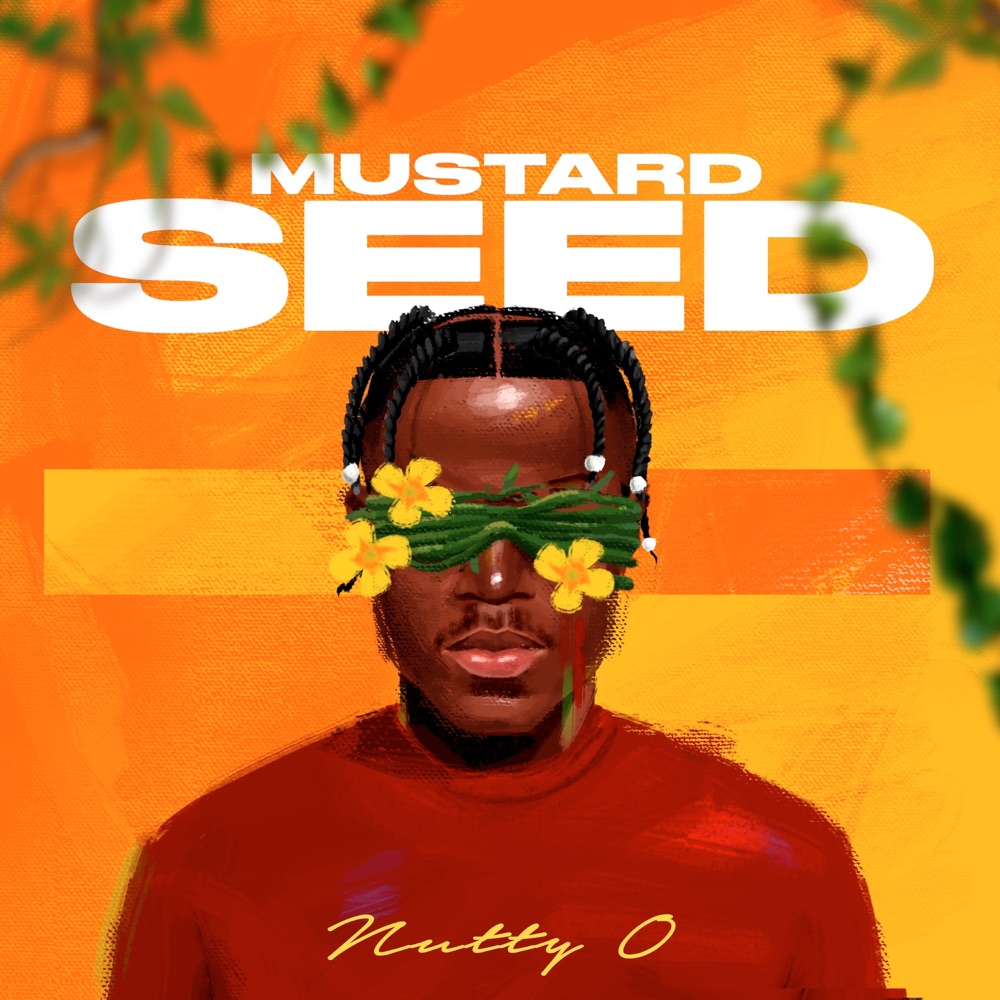
Nutty O already ran the experiment, and it worked.
He took Shona, the actual language, and put it on records next to Stonebwoy from Ghana and Demarco from Jamaica. He recorded across English, Shona and Patois and made them sit in the same pocket. He landed on a posthumous Bob Marley project. He sold Shona to a Caribbean audience by wrapping it in dancehall that sounds expensive anywhere on earth.
That is the formula in one sentence. He did not dilute the language to travel. He upgraded the production so the language could travel. The Shona stayed. The mix got a passport. Nutty O understood that the vernacular was the distinctive thing, the reason to listen, and the production was simply the vehicle that carried it past the border. He kept the gold and bought a better truck to move it. That is the entire game.
Takura: Leaning the Right Way
Takura's Vanilla EP, out this month, is the most recent evidence that the instinct is spreading.
Four of its five titles are Shona: Gwara, Handizvione, Anondida, Kanganisa. The emotional core of the project lives precisely in the words that do not translate. And yet the production stays globally legible, smooth Afro-pop and Afro-fusion that a playlist editor in Lagos or Johannesburg would not flinch at. That combination is the model: Shona feeling, world-grade sound. He is making love music that is unmistakably ours while keeping the sonic packaging that lets it leave home.
That is exactly the balance Nutty O proved years ago, now showing up in the work of an artist Davido himself has reached for. When Nigeria starts paying attention to a Zimbabwean making Shona-forward records, that is not a coincidence. That is the cheat code working in real time.
Holy Ten: The Cheat Code He Refuses to Play
And then there is the painful one.
Holy Ten is arguably the most potent Shona writer of his entire generation. His command of the language, the way he turns ordinary Shona into something that lands in the chest, is a gift Nutty O and Takura would both respect. He has the strongest version of the exact raw material this whole argument is built on.
And he traps it. He pours world-class Shona writing into production that struggles to leave Harare, visuals that do not compete on a continental stage, mixes that do not pass the international ear test. He is holding the cheat code in his hand and refusing to enter it. The language is there, fully loaded, more powerful than anyone's. The vehicle to carry it across the border is what he will not invest in. It is the most frustrating waste in our music, because the hard part, the part you cannot teach or buy, he already owns.
Put the three side by side and the lesson is unmissable. Nutty O has the language and the vehicle. Takura is building both. Holy Ten has the richest language of all and no vehicle. Shona was never the variable that decided who crossed over. Production was. The language was always an asset, never the liability.
Where I Will Push Back on Myself
I am not going to pretend the cheat code is a magic button, because it is not.
Language alone does nothing. Shona over a cheap beat is just a local record with extra steps, which is precisely Holy Ten's trap. The vernacular is the differentiator, but the production is the passport, and you need the passport stamped to go anywhere. Drop the production and the whole thesis collapses.
There is also a real risk of tokenism, of a Shona phrase tossed onto a track as exotic seasoning rather than load-bearing language. That is not what I am arguing for. I am arguing for Shona as the spine of the song, the way Yoruba is the spine of Asake's, not as a garnish to prove where you are from.
And yes, leaning into Shona narrows the lyrical comprehension for a global listener. But that was always going to be true, and Tyla, Rema and amapiano have already proven the ceiling is far higher than we feared. The trade is overwhelmingly worth it. You give up some literal understanding and you gain the one thing that is impossible to replicate: a sound that could only have come from us.
Stop Apologising
So here is where I land.
The advice to sing in English to cross over is the worst advice in Zimbabwean music, because it tells you to throw away your only unfair advantage in exchange for a crowded field where you bring nothing new. The world has enough English pop. It does not have enough Shona.
The next Zimbabwean artist to truly cross over will not do it despite Shona. They will do it because of Shona, wrapped in production good enough to carry it. Nutty O drew the map. Takura is walking it. Holy Ten is standing on the gold complaining he cannot find any.
The cheat code has been sitting in our mouths the whole time. We just kept calling it a limitation. It is time we called it what it is.

Listen to Teemak
Afrobeat, Amapiano and Sungura guitar out of Harare. Start with the Mavambo EP or the Disemba single.