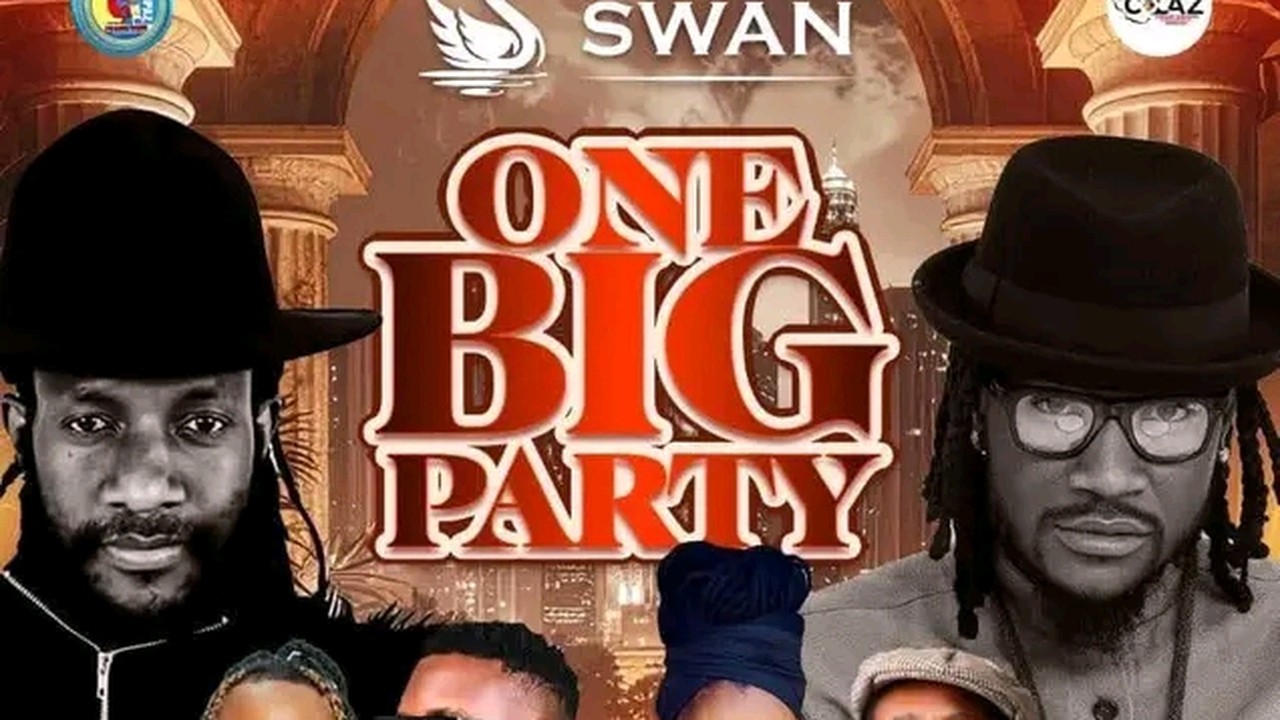
On the last night of 2025, the two biggest artists this country has produced stood on one stage at Glamis Arena. Chipaz packed it out, moved it from the National Sports Stadium when demand outgrew the room, threw tents over the crowd against the weather, and let Harare decide. Killer T warmed it up. Feli Nandi softened it. Then the two kings did what they have done for over a decade: proved everything and settled nothing.
By morning the internet had its verdict. The emotional peak of the night belonged to Winky D, and a section of the crowd was calling Jah Prayzah a "small boy."
I want to say this plainly, because it is the whole reason I am writing. That take is lazy, and it is wrong. Not because Winky D did not move the room more, he probably did. It is wrong because it treats a difference of strategy as a difference of size. These two men are not competing to be the same thing. They built two completely opposite blueprints for how to survive as an artist in Zimbabwe. And the cruel part, the part nobody wants to say, is that the country forces you to choose between them.
The Resistance Model
Winky D chose the truth, and he pays for it in the only currency the state controls: access.
The Gafa is the most important protest voice this country has produced since the chimurenga singers. Eureka Eureka was not an album, it was a national mood set to a riddim. "Ibotso," "Dzimba Dzemabwe," these are songs that mourn a country out loud, that name the looting and the decay and the way the poor get crushed by the people who already have everything. He does not do it in code thick enough to deny. He does it in Shona clear enough to convict.
And the system has responded exactly the way frightened systems do. A ZANU PF-aligned group publicly pushed to have his music banned for being anti-government. His political songs are de facto absent from ZBC, the state broadcaster. At NAMA 2026, "Siya," a genuine chart-topper, was conspicuously left out of the Outstanding Song category, a snub so clean it could only have been deliberate. He has faced cancelled shows. He has performed under the constant low hum of risk that follows anyone in this country who says the quiet part at full volume.
So here is the position Winky D occupies. He owns the people's hearts and almost none of the people's airwaves. He is the biggest artist in the country on a station that will not play him. And when home gets too tight, he does what the censored have always done. He goes where the truth still pays. He sells out Lusaka. He owns the diaspora. The Gafa thrives precisely in the rooms his own government cannot reach into.
That is the resistance model. You trade airplay, safety and institutional blessing for something the state can never confiscate, which is the unconditional love of the people you refuse to lie to.
The Diplomat Model
Jah Prayzah chose access, and he pays for it too, in a currency his critics never bother to count.
Mukudzeyi is a different kind of genius, and I am tired of pretending he is a lesser one. The man took the mbira, the most sacred instrument we have, dressed it in military regalia and modern Afro-fusion, and turned Zimbabwean cultural pride into something the whole continent could sing. Ndini Mukudzeyi, out last May, is a mature artist doing exactly what he set out to do. And look at who answers his calls: Davido, Diamond Platnumz, Yemi Alade, and now Lady Zamar on "inini newe." That is not luck. That is a passport, and it is the rarest document a Zimbabwean artist can hold.
Jah Prayzah is family-friendly, radio-ready, globally legible. The state is comfortable with him. The airwaves are open to him. He performs for everyone from the ghetto to the State House without anybody having to check the lyrics first. To the resistance camp, that comfort is the indictment. They call it safe. They call it sellout. They call him a small boy.
But ask yourself what the diplomat actually gives up. He gives up the right to be the voice in the riot. He gives up the catharsis, the dangerous intimacy Winky D has with a crowd that feels spoken for. Jah Prayzah will never be the man whose song you sing with your fist in the air at the moment the country breaks. He chose reach over rage, the continent over the catharsis, the long institutional life over the short electric danger. That is a real trade, not a free lunch. He pays in relevance to the struggle. He just pays in a currency his fans, who are eating, do not miss.
The Lazy Binary
Here is where I get off the bus the internet is driving.
The Zimbabwean conversation insists on a single frame: Winky D is real, Jah Prayzah is a sellout. It is class war dressed as music criticism. The split tracks almost perfectly with age, with income, with politics. The struggling young urban listener hears himself in the Gafa. The aspirational, the family audience, the diaspora uncle who wants to feel proud and not angry, reaches for Jah Prayzah. Both camps then mistake their own circumstances for an objective ranking of talent.
It is nonsense. You cannot rank a protest singer against a cultural ambassador any more than you can rank a journalist against a diplomat. They are doing different jobs that the same broken country happens to require at the same time. The tell is that the two men themselves have never played this game. In over a decade of "rivalry," Winky D and Jah Prayzah have never traded a single jab. They shared that Glamis stage on purpose. They understand something their fans refuse to: they are not each other's competition. They are each other's proof that there was more than one way out.
The Country Is the Real Story
Strip it all back and the villain of this piece is not either king. It is the conditions.
Zimbabwe has built a music industry where you can have the people's heart or the state's airwaves, but the system works very hard to make sure you cannot comfortably hold both. Tell the truth and you lose ZBC, the NAMA, the safe show, maybe more. Stay legible and you keep the airwaves but forfeit your claim to the rage. Truth and access have been made into a forced choice, and that is not a Winky D problem or a Jah Prayzah problem. That is a Zimbabwe problem.
Look at the careers in this light and the supposed rivalry dissolves into something sadder and more honest. Two of the most gifted artists Africa has produced this century each looked at the same impossible country and picked a different escape hatch. One went through the people. One went through the borders. Both were right, because both survived, and in an industry this hostile, with the economics this broken, survival at the top for fifteen years is the only metric that cannot be faked.
What Each One Taught Me
I take something specific from both, and they map almost exactly onto things I have argued on this blog before.
Jah Prayzah is the living proof of the Shona crossover argument. He did not dilute the mbira or abandon Shona to go continental. He upgraded the production and let Davido and Diamond meet him on his own cultural ground. He is the export model with a heartbeat.
Winky D is the proof of the other half of the economics, the one nobody writes honestly: the diaspora and the region pay the bills the state tries to withhold. When they close the airwaves at home, Lusaka and London open. The censored Zimbabwean artist did not die. He just got a frequent flyer card. That is its own kind of victory, and its own kind of indictment of home.
So Who Is the King?
Wrong question. We have two, and we should stop being embarrassed about it.
The fact that this small, broke, beautiful country produced two artists who built opposite, fully-realised blueprints for survival, one through defiance and one through diplomacy, is genuinely the most Zimbabwean thing about our music. We are a nation of people who found two completely different ways to keep their dignity under pressure. Of course our music did the same.
I will give you my actual verdict, though, because dodging is for cowards. On the night, in the room, with the country in the state it is in, Winky D will always win the moment, because the people are starving to be told the truth and he is the one willing to risk feeding them. But across a fifteen-year career measured by who got Zimbabwean culture furthest past our own borders, Jah Prayzah quietly holds the map. The Gafa owns the heart. Mukudzeyi owns the passport. Neither owns both, because the country will not let them.
The day a Zimbabwean artist can tell the whole truth and still get played on the national broadcaster, that is the day we will only need one king. Until then, we earned two. Long live both of them.

Listen to Teemak
Afrobeat, Amapiano and Sungura guitar out of Harare. Start with the Mavambo EP or the Disemba single.