In March I sat down and called Winky D's "Fake Love" win at NAMA an AI video farce. I said a state jury garlanded the robot while the videographers and gaffers starved. I stand by every word of the anger. I was just wrong about one thing.
It was not a farce. A farce is a one-off, an absurdity you laugh at and move past. What happened at NAMA was a preview. And in the three months since, the preview became the main feature.
Let me show you the country I am looking at this week.
Three Songs, One Author, and the Author Is Not Human
The biggest street song in Zimbabwe right now is Magic Wacho's "Kure Kure." It went number one here, number eighteen in South Africa, and the streets adopted it like a national hymn. It takes the old chimurenga military songs, the liberation chants that carry actual blood in them, and rebuilds them for a phone screen. It is also, by the admission of the platforms pushing it, an AI record. EarGround literally announced it as "the new AI song rocking the streets."
The gospel charts have their own moment, GraceWave's "Ndakainamatira Nyaya Iyoyi." I had been praying about that matter. It is warm, it is sincere, grandmothers are nodding to it in kombis on Sunday. The official video is an AI video and GraceWave exists somewhere between an artist, a brand and a model. It trended anyway. Nobody checked the credits. They felt the words and that was enough.
And then this week, while I was still writing this, Winky D dropped the Big Party EP, seven tracks, and started rolling out the videos. Watch which one he put at the front. The lead video, the flagship, the one they are already calling ngoma yegore, is "Chivanhu," and it is an official AI video made with Jusa Dementor, the same partnership behind "Fake Love." The human-shot videos came too. "Makanyanya" is a real shoot, directed by Imaniii. So this is not a man who has abandoned human crews overnight, and I am not going to exaggerate that he has.
But look at the order of operations, because it tells you everything. When the Gafa wanted his headline, his ngoma yegore, the song the whole country would judge the EP by, he reached for the machine, not the camera. The AI video is the main act now. The human one is the support slot. That is the quiet, real shift. Not that AI replaced everyone in one night, but that it graduated to the front of the bill, and the people who shoot for a living got moved down the running order.
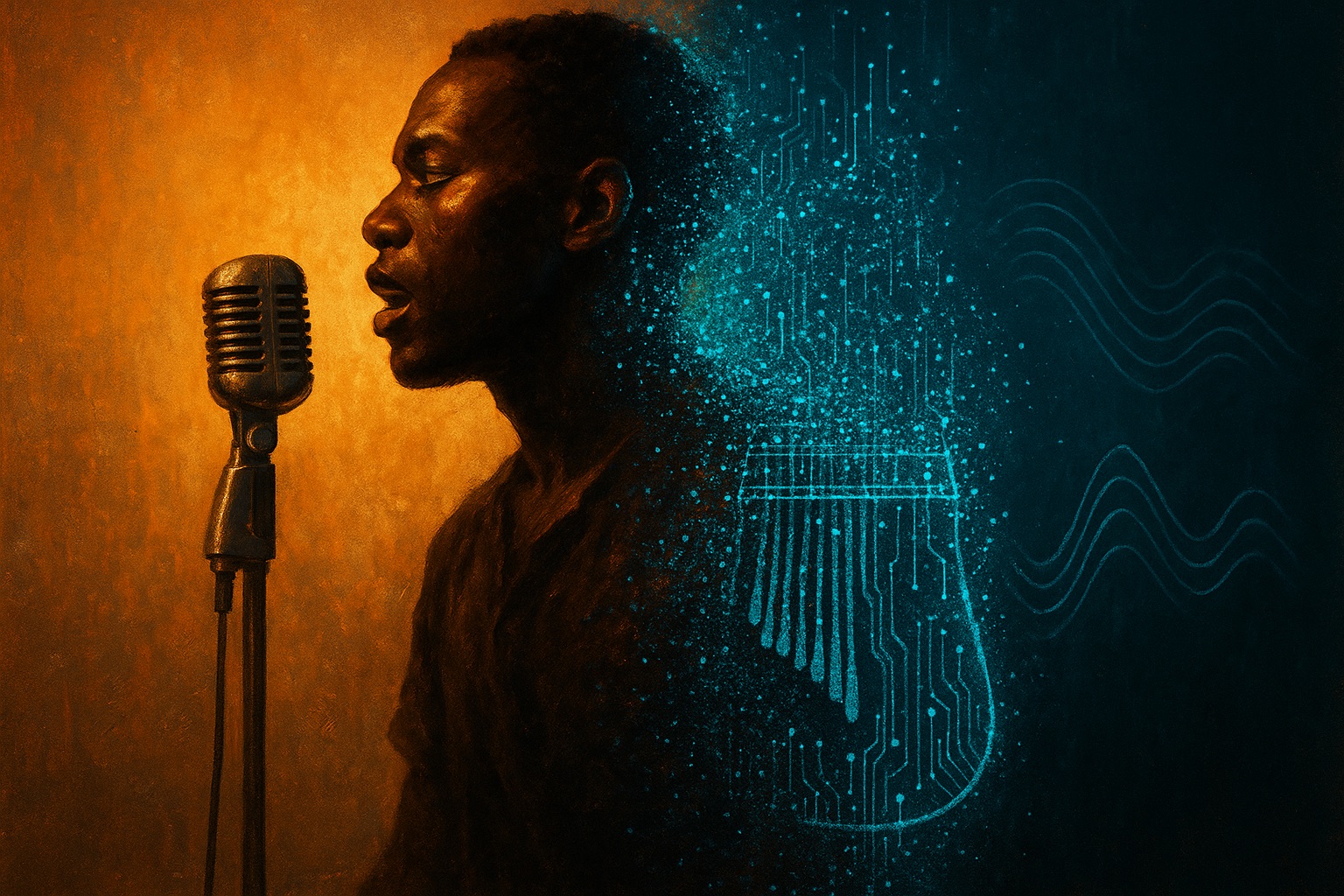
Read those three together. The war song, the prayer, and the king's new anthem. The most sacred registers we have, our liberation memory, our faith, and our reigning monarch, all arrived this season wearing a machine.
I Owe You an Honest Update
When I attacked the "Fake Love" win, my argument was about labour. Real crews lost a trophy to a render. That argument is still true and I am not taking it back.
But I was treating AI like a thief that broke in. It did not break in. We opened the door, sat it at the head of the table, and asked it to lead grace. Winky D is not a victim of the algorithm here. He is its most powerful early adopter in this country, and when the king adopts a tool, the tool stops being a controversy and becomes the standard. Every young artist watching just learned that the fastest, cheapest route to a "premium" looking video is a prompt, not a production company.
That is the part the angry takes, including my own first one, missed. The danger was never that AI would win an award. The danger is that it would win the default.
The Questions Nobody on the Timeline Wants to Sit With
So let me ask the uncomfortable ones, because the polite arts pages will not.
One. If a machine can comfort a grieving person, what was the artist ever selling? GraceWave moved real people who were really hurting. If the feeling lands without a human behind it, then the thing we always called the soul of the music was, at least partly, a feeling we projected onto it. That should terrify every singer in this country and it should be discussed openly, not hidden behind "it has no soul" when the streams say otherwise.
Two. Who gets paid? A song "imagined by" a producer and a model has a credits page full of ghosts. Zimbabwe already has, in the words of cultural manager Keith Kuhudzai, collection systems too weak to pay human artists their due. His warning is blunt: if we do not digitise rights management and metadata, artists keep losing revenue. Now drop synthetic catalogues on top of a royalty system that already leaks, and ask who is collecting the cheque when "Kure Kure" plays ten million times. It is not the soldiers who wrote it. It is probably not even a Zimbabwean.
Three. Who owns a war song when a machine sings it? Magic Wacho's hit is built on liberation chants that belong, morally, to everyone who died for them and no one in particular. AI made it shareable and gave it a number one. Is that preservation, finally getting our heritage onto the platforms where the youth actually live? Or is it strip-mining the ancestors for a trend, with no one to answer to? I genuinely do not know, and anyone who tells you the answer is obvious is selling something.
Four. Should the robot and the human compete in the same race? Guitarist Clive "Mono" Mukundu, who has already built hundreds of AI-assisted demos so he is no luddite, says broadcasters may need separate categories for synthetic music so it does not drown the traditional artists. After the "Fake Love" trophy, he is plainly right. You do not put a forklift in the weightlifting final and call it fearless.
Five. Are we even in the room? Fulbright specialist James Carey warned that Zimbabwean creatives risk being shut out of the global conversations writing AI and intellectual property law. Think about what that means. The tools are foreign. The IP rules will be foreign. And we supply the one thing they cannot synthesise from nothing, the culture, the Shona, the chimurenga melody, the feel. If we are not at the table, we are not the chef. We are the ingredient.
What the Future Actually Holds
I see three roads, and we are going to walk some blend of all of them.
The flood. This is the cheap, likely default. The barrier to "releasing music" drops to a sentence in a text box. The charts fill with synthetic content because it is faster and free, human musicians cannot compete on cost, royalties drain to whoever owns the model, and "Zimbabwean music" slowly becomes a style preset that anyone, anywhere, can prompt. Grammy winner Matt B said it cleanly, AI is not necessarily bad but without regulation it eats the human authenticity that made the music mean anything.
The premium split. This is the hopeful one and there is real evidence for it. Gospel artist Joshua Mtima points out his live versions beat his AI versions because audiences still pay for the human touch. So the music splits in two. Recorded and video go cheap and synthetic and disappear into the feed, while the live show, the sweat at Glamis, the voice cracking in a real room, becomes the scarce, expensive, valuable thing. The artists who survive are the ones who own a relationship with a crowd, not just a catalogue of files.
The equaliser. This is the one I am quietly rooting for. A kid in Mbare with a phone and no studio money now has the same video budget as a label act, because the budget is a prompt. Used with taste, AI lets Zimbabwean talent punch at a global weight it was always priced out of. The same tool that floods the market can also free the broke genius. The difference between the flood and the equaliser is not the technology. It is whether we build the rules, the credit, and the payment systems before the wave, instead of after.
Where I Land
I am not going to pretend I have made peace with this. I attacked the AI video three months ago and the only thing that has changed is the scale. The machine that took one trophy now holds the street anthem, the gospel hit, and the king's latest drop.
But pretending it is a passing gimmick is how we lose. The machine learned to sing Shona this year. It learned the chimurenga melody, the gospel cadence, the Gafa's flow. It is not going to unlearn them. Ndakainamatira nyaya iyoyi, GraceWave sings, I prayed about this matter. Fine. We can pray. But after the prayer we had better digitise the royalties, fence off the awards, get a Zimbabwean seat in the rooms where the IP rules get written, and decide, on purpose, what part of this music is human and worth protecting.
Because the audience has already told us something we do not want to hear. When the machine sang, they did not ask who was behind it. They just felt it, and they pressed play again.
The soul of the music was never only in the singer. It was always partly in us, the ones listening. That is the door we left open. Now we live in the house.

Listen to Teemak
Afrobeat, Amapiano and Sungura guitar out of Harare. Start with the Mavambo EP or the Disemba single.