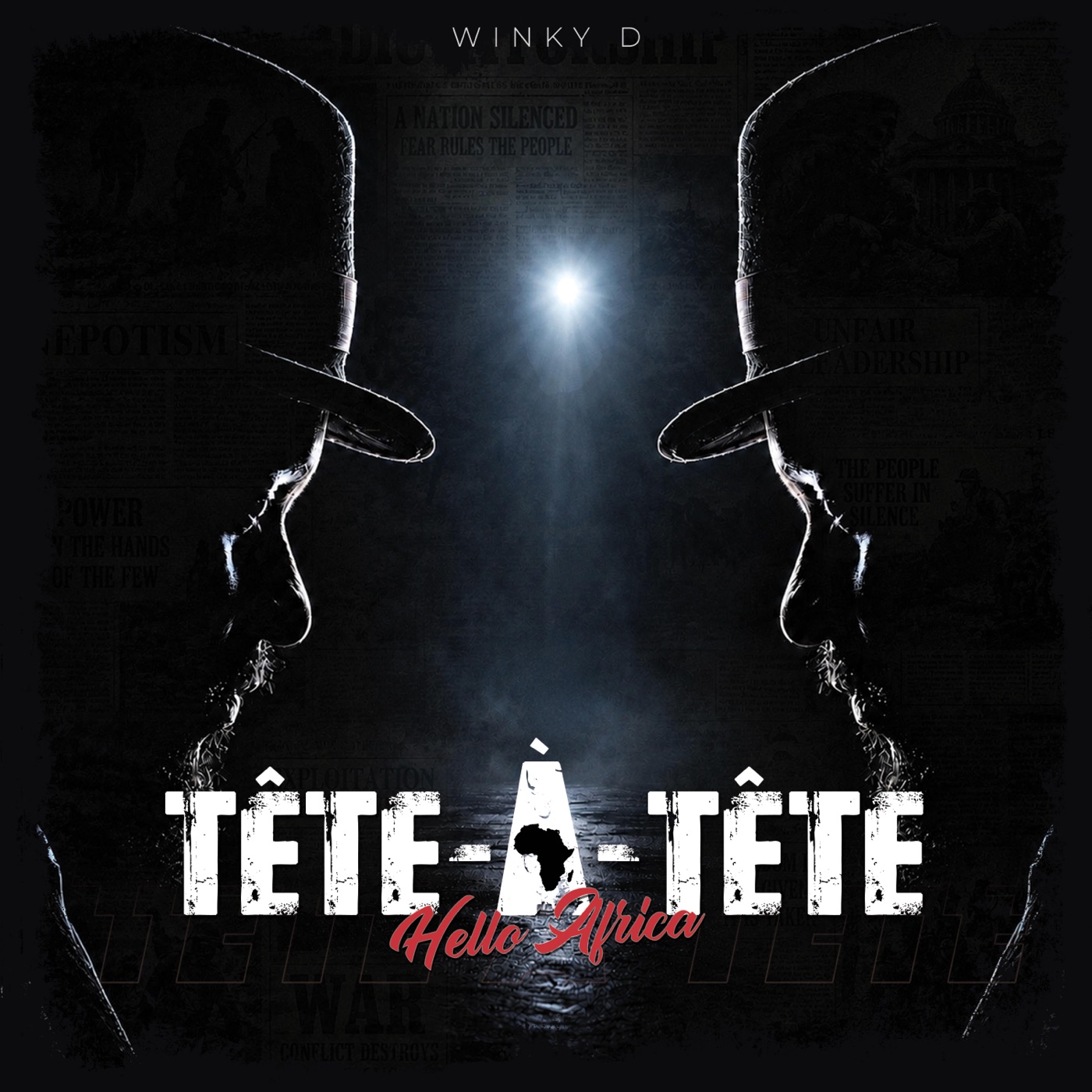
Winky D released Tête-à-Tête (Hello Africa) on 31 August. Sixteen tracks. Rocky Dawuni, Patoranking and Raybekah on the features. And a title that tells you the assignment before a single note plays.
For most of his career, Winky D has been Zimbabwe talking to Zimbabwe. The father of Zimdancehall, the mouthpiece for the marginalised, the man who could empty a stadium's lungs with one line about home. Hello Africa is the sound of him deliberately widening the room. This is no longer a conversation with Harare. It is a conversation with the continent, and through it, with the world.
I want to do the harder thing than clap for that. Because the ambition here is real, and when the ambition is this big, the honest review is the respectful one. I am writing this as someone inside the scene, not above it. So let me tell you exactly what this album gets right, where it falls short of its own reach, and why, even if this is not the one, the direction alone changes the conversation.
The Shift: Impact Over Hits
The first thing to understand about Hello Africa is that Winky D is no longer chasing the local hit. He has earned his way past that. He has entered the stage of his career where the goal is impact through music, not another chant for the summer, and you can hear that intention in the writing.
The themes tell the story: inequality, patriotism, African leadership, freedom, decolonisation, the weight of being watched, the cost of speaking. "Blind Patriots." "Spirit of Kunta." "Roots and Culture." "Leadership" with Patoranking. This is a man arranging his convictions for an audience that does not know his neighbourhood but understands his subject. He is not translating Zimbabwe for the world. He is placing Zimbabwe inside a bigger argument the whole continent is already having.
And crucially, he is doing it without abandoning home. He is still serving both markets. The local listener gets Winky the resistance artist; the new listener gets Winky the Pan-African voice. That double-service is the hardest trick in this game, and on the level of message, he pulls it off. The vision is the biggest he has ever attempted, and the vision is not the problem.
Why Reggae Is the Smart Lane
The sonic choice is reggae, and it is a shrewd one.
Everyone else with global ambitions is running at Afrobeats, which is now the most crowded, most expensive, most gatekept room in African music. Winky went the other way, into reggae, and reggae rewards exactly what he already has: a message, a moral centre, a voice that sounds like it has lived through something. In a lane defined by conviction, his authenticity is an unfair advantage. It is a genuinely easier win because it is a less crowded one.
It is also not a costume. This is the part outsiders miss. Reggae is not a foreign jacket Zimbabwe is trying on for export. The reggae current ran under so much of Zimbabwe's late-nineties and early-2000s output, gospel and commercial pop alike. A whole generation of Zimbabwean records were built on that offbeat, that bassline, that spiritual cadence, long before Zimdancehall gave it a harder edge. So Winky D reaching for roots reggae in 2026 is not a pivot into someone else's tradition. It is a homecoming to one of ours. When he stands next to Rocky Dawuni, a Ghanaian who has actually been Grammy-nominated in the reggae space, the pairing reads as lineage, not tourism.
Here is the honest caveat, though: the Jamaicans, and increasingly the West Africans, are still producing more organically authentic reggae than what has been made here. That is expected. It is their home genre and their century of practice. Which brings us to the one thing holding this album back from the room it is knocking on.
The Production Gap
Hello Africa deserved a global studio, and it did not fully get one.
The message is world-class. The production is not yet at the same altitude. Too much of it feels engineered rather than organic, and for a reggae record, organic is not a luxury, it is the genre's entire promise. Reggae lives or dies on feel, on space, on the sense that real musicians breathed on it. When the mix is clean but airless, the conviction in the writing gets a ceiling put on it.
This is the same gap I named on Nutty O's Different Root, and it is worth repeating because it is the defining limitation of Zimbabwean music at this level. Our mixing and mastering is good by our standards and still audibly short of what the big continental records get, where the finishing is often done in America by engineers whose fingerprints are on Davido, Wizkid, Tyla and Ayra Starr. The frustrating part is never the gap itself. It is the refusal to acknowledge the gap.
And Winky D, of all people, already knows the solution, because he applies it everywhere else. He does not shoot his own visuals. He hands them to Shawn Ray, his frequent collaborator, a specialist who does that one thing at a level Winky himself cannot. That is exactly the right instinct. So the question writes itself: if you will outsource the eyes to the best available hands, why not the ears? A message this important, a vision this large, deserved the same discipline on the mixing desk that it clearly got on the camera. Bring in the professionals who finish records for a living, and Hello Africa stops being a great Zimbabwean album reaching for the world and becomes a record that belongs there on contact.
The Suno Question
I have to name this, and I am naming it as a listener, not as an accusation with a receipt.
Winky's recent EP leaned on generative tools, on Suno specifically, to a degree that became hard to un-hear. On Hello Africa that reliance is lighter and better disguised, hidden enough that the untrained ear will sail past it. But to my ear it is not entirely gone.
I want to be precise about why this matters, because it is not a moral panic about AI. It is a craft point. The entire selling proposition of a roots reggae album is that it is organic, that it was played and felt and not assembled. The moment generative texture creeps into that, it quietly undercuts the one promise the genre cannot break. It is the exact opposite of the Shawn Ray principle. Where a human specialist raises the ceiling, a generative shortcut lowers the floor of authenticity, and on a reggae record that floor is the whole point. I would rather hear a slightly rougher album that was entirely human than a polished one carrying a synthetic seam, however well buried. Treat this as one listener's suspicion, held honestly. But I would be lying if I said I did not hear it.
The Grammy Road Is Real Now, and Barely Walked
Zoom out, because this is bigger than one album. Two of Zimbabwe's most important artists, Nutty O and Winky D, both released deliberately outward-facing albums in the same window. That is not a coincidence. That is a scene shifting its gaze. And this feels like the closest Zimbabwe has come to being a real part of the Grammy-era conversation in African music.
The door is genuinely open. The Recording Academy has spent the last few years expanding into Africa, and in 2024 it introduced the Best African Music Performance category, a dedicated lane recognising the continent's music on the biggest stage in the industry. That is not a rumour. That is a standing category, waiting for submissions.
The problem is that Zimbabwe has barely begun to walk through it. As I read the board, Tamy Moyo is one of the very few of ours treating a Grammy as a concrete goal to be worked toward rather than a daydream to be mentioned in interviews, and even that early seriousness is a bigger deal than the scene gives it credit for. What we need now is more Zimbabweans actually engaging the Academy, understanding submissions, joining as voting members, learning the machinery that turns a great record into an eligible one. Talent has never been our shortage. Infrastructure and intent have. Hello Africa is the kind of album that makes the case that the intent is finally arriving.
The Verdict
- Message and vision: 9/10. The most ambitious, most globally legible statement Winky D has ever made, and he made it without selling out the home crowd.
- Production and sonics: 6.5/10. Clean, but too engineered for a genre that runs on organic feel. The ceiling is self-imposed and fixable.
- Overall: 7.5/10. The direction is a nine. The execution is a six. The average is still one of the most important Zimbabwean albums of the year.
If Hello Africa turns out not to be the record that breaks Winky D internationally, do not read that as failure. The direction alone is the win. He has a strong, authentic voice and a real message, aimed at the one lane where those two things count for more than budget, and he is pointing an entire scene toward a door most of it forgot was open. That matters more than any single track placement.
He does not need a new vision. He needs a better studio, and the confidence to hand the ears to a specialist the way he already hands over the eyes. Do that, and the next one does not just reach for the world. It arrives.
Tête-à-Tête (Hello Africa) is out now on all platforms.
Stream it. Then tell me your rating in the comments.

Listen to Teemak
Afrobeat, Amapiano and Sungura guitar out of Harare. Start with the Mavambo EP or the Disemba single.