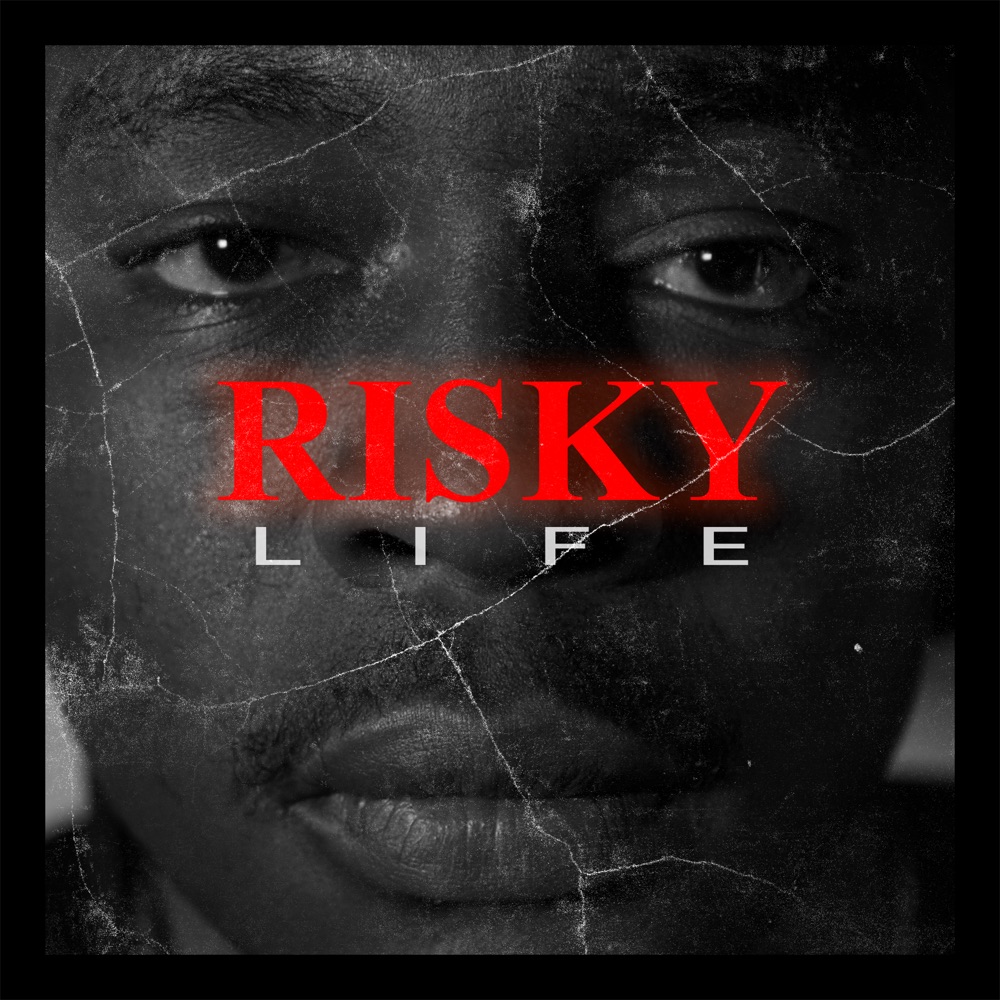
Let me start with the part nobody who is honest disputes.
Holy Ten, Mukudzeyi Mukombe, is the most naturally gifted storyteller of his generation. When he is locked in, no one in the new wave writes a verse that lands in the chest the way his does. He took the ghetto diary, the small humiliations and quiet ambitions of an ordinary Zimbabwean kid, and turned it into chart music. People do not love Holy Ten because of marketing. They love him because he says the thing they were feeling but could not phrase.
So when the promo for Risky Life 3 went out branded as "no drama, no beef, just good music," I understood the strategy immediately. After the year he had, he needs to remind everyone what he is for. But it also made me want to write this, because it quietly admits something. Good music was never Holy Ten's problem. Framing the comeback around it is solving for the one thing he already has.
And let me be clear about the album itself, because the timeline matters. As I write this, Risky Life 3 is not out. It has been promised, dated, and moved more than once, announced for November, then December, then folded into a 2026 launch with an event in Sydney. This is not new. Holy Ten has been doing the announce-and-slide dance for years, project after project. The date is a vibe, not a commitment. Hold that thought, because it turns out to be the most revealing thing about him.
The real question is the one in the title. Can he dominate 2026? Not chart, not trend, dominate. And to answer that honestly, I have to talk about the ceiling he keeps building over his own head.
The Talent Is Real. The Package Is Not.
Here is the uncomfortable thing about Holy Ten's catalogue. The writing is world-class. The audio rarely is.
Listen to his biggest records back to back and then put on something engineered for export. The gap is not in the songwriting. It is in the mix, the mastering, the low end, the vocal treatment, the things a casual fan cannot name but absolutely feels. The same goes for the visuals. For an artist of his stature, too many of his videos look like they were made to hit a deadline, not to compete on an African stage with Nigeria and South Africa.
This matters more than it sounds. When a song is mixed for the world, it travels. A DJ in Lagos or a playlist editor in Johannesburg does not know your backstory. They hear two things: is the song good, and does it sound expensive. Holy Ten consistently nails the first and skips the second. He has been exporting Premier League songwriting in a kit that does not pass the international ear test.
I am not guessing at the cost of this. I have been in Lagos studios. I have heard what world-class production does to a decent song, and what it does to a great one. Holy Ten's songs are great. Imagine them properly engineered. That is not a small upgrade. That is the difference between a domestic king and a continental name.
Nutty O Understood the Assignment
If you want proof that the investment pays, look sideways at Nutty O.
Nutty O is not a better writer than Holy Ten. I will say that plainly. But he understood something earlier: in 2026, sound quality is a passport. His Mustard Seed album was built like an export product, recorded across English, Shona and Patois, with Stonebwoy from Ghana and Demarco from Jamaica in the building. He landed on a posthumous Bob Marley project alongside Winky D. None of that happens by accident. It happens because he treats production and international collaboration as the job, not the garnish.
Nutty O made his Shona legible to a Caribbean ear by wrapping it in dancehall that sounds expensive anywhere it plays. Holy Ten makes Shona that hits harder, then traps it inside a mix that struggles to leave Harare. One man built a smaller song into a bigger career. The other keeps doing the opposite. That comparison should keep Holy Ten up at night, because the gap between them is not talent. It is decisions.
Shashl and the Cost of Everything Else
Then there is Shashl, and her story complicates the lesson in a way I think is important.
Shashl invests. The videos are distinct, the audio is clean, the brand is deliberate. She became the first Zimbabwean woman signed to Universal Music Group, which is not a thing that happens to people who treat the craft casually. On the metric Holy Ten ignores, she is the model.
And yet her ceiling got nailed shut by things that had nothing to do with the music. In 2022 she was the victim of a leaked tape, revenge weaponised against her by an ex. Let me be precise, because the timeline matters and fairness matters: that was something done to her, not a scandal she manufactured. On top of it, she carried the resentment of being the daughter of former Health Minister Obadiah Moyo, a politician fallen from grace. (For the record, she is Obadiah Moyo's daughter, not Energy Mutodi's, a detail people routinely get wrong.) The crowd that hates a politician's child does not pause to separate the parent from the artist.
So Shashl had the investment Holy Ten lacks and still got capped, by misogyny, by a violation, by inherited politics. The lesson is not "investment guarantees success." The lesson is sharper than that. Investment is necessary but not sufficient, and the things that cap you are not always fair. Holy Ten has been spared most of what derailed Shashl. The frustration is that he keeps capping himself.
King98 and the Lie That Money Buys the Crowd
Now flip it entirely. King98 is the proof that you cannot buy your way in.
King98, son of the late Impala Car Rentals millionaire Thompson Dondo, launched Francesca in 2019 with Davido, Nasty C and Nadia Nakai on the bill. Money was never his constraint. He bought the features, the production, the rollout. And Zimbabwe rejected him anyway, to the point he openly said people hate his music because of his rich background.
Put King98 and Holy Ten side by side and you get the whole equation. King98 had the chequebook and not the connection. Holy Ten has the connection and not the chequebook discipline. The crowd will not be bought (ask King98) and talent alone will not cross borders (watch Holy Ten). The artist who wins is the one who has both: the authenticity money cannot manufacture, and the polish authenticity does not automatically provide.
Holy Ten is one honest decision away from being that artist. That is what makes this maddening rather than tragic.
The Year He Set on Fire
I cannot write this piece and skip 2025, because momentum is the most expensive thing in music and he torched a year of it.
The public accusations against the President's sons over a gifted house. The cruel comments about his wife Kimberly Richards. The threats, the claims of soldiers at his door, the rehab in South Africa, the GoFundMe that fans hesitated to fund, the marriage reportedly collapsing, the October apology titled "Apology, Reflection and Renewal." Whatever was happening to him privately deserves compassion, and I offer it sincerely. But commercially, the scoreboard is brutal. He did not lose 2025 to a rival. He lost it to himself.
That is the context that makes "no drama, just good music" read less like a slogan and more like a man trying to find the door back to the room he left. The reset instinct is correct. The worry is whether a reset is enough when the ground has moved underneath him.
The Loyalty Trap
Now I want to say the thing that will annoy his fans, because it is about his fans.
Their loyalty is killing his talent.
Watch the pattern. He announces an album. The date moves. He announces it again. It moves again. He goes quiet, then surfaces in a scandal, then apologises, then promises music. And every single time, the fanbase is right there, full volume, forgiving everything, pre-ordering the hype for a project that may not arrive when, or how, he said it would. Risky Life 3 is just the latest lap of a race he has been running for years. The dates slide and nobody charges him for it.
Understand what that does to an artist. Consequence is the thing that forces growth, and his fans have lovingly removed all of it. When the crowd cheers no matter what you ship, no matter when you ship it, no matter how it is mixed, the incentive to sharpen disappears. Why pay for world-class engineering when the raw version goes number one anyway? Why hit a deadline when missing five of them costs you nothing? Why grow when you are already adored at your current level? Devotion that should have been fuel became a cushion, and you cannot push off a cushion.
This is the cruel irony underneath everything else in this piece. The under-investment, the missed dates, the unbothered bounce-back from self-inflicted scandal, they all share one root. He has never been made to feel a real consequence, because the love arrives unconditionally. A harder, colder market would have forced him to level up the audio or lose, to ship on time or be forgotten, to behave or be dropped. Zimbabwe's devotion lets him coast on pure ability. The fans think they are protecting him. They are actually anaesthetising the exact nerve that makes an artist evolve.
The War on Two Fronts
Because here is what changed while he was offline. The attention economy stopped waiting.
Above him sit the exporters, Nutty O and the polished crowd building for the continent. Below him, and this is the real threat, sits a TikTok-native new school that does not need his depth at all. Sane Wav turns "Lena" and "Bhimu" into viral loops. The Ama2K wave runs on fifteen-second hooks, heavenly bubblegum melodies, dances, snippets. It is engineered for the feed, not the album.
Holy Ten's whole genius is the three-minute story. The new school's whole genius is the fifteen-second moment. You cannot out-snack a generation that was born snacking. While he was making headlines for the wrong reasons, they were quietly colonising the exact platform where music is now discovered. He is now fighting upward against polish he refuses to buy, and downward against virality he is temperamentally built to lose.
That is a hard war. It is not an unwinnable one.
So, Will He Dominate?
Here is my honest answer, and it has two halves.
Domestically, yes, he can still own 2026, because the talent and the relatability are simply unmatched and Risky Life 3 leaning into "good music" plays directly to his strength. When Holy Ten decides to be the best writer in the room, he is, and Zimbabwe will always come home to that voice. A strong, drama-free album cycle wins back the narrative quickly.
But dominate in the way the question really means, crossing borders, defining the era, putting Zimbabwe on a back that carries it past our own borders, no. Not yet. Not until he treats audio engineering and visual direction as non-negotiable the way Nutty O does, and not until he proves the scandals were a chapter and not a pattern. His talent is the moat. His under-investment is the ceiling. His scandals were the self-inflicted wound. All three are inside his control, which is the good news and the indictment at once.
I want him to win, for the record. I am not writing this from across the aisle. I am writing it the way you talk to a brother who is the most talented person in the room and keeps showing up with the cheapest setup. The kid can write anyone under the table. Now I want to hear it sound like the masterpiece it already is on the page.
Risky Life 3 could be the start of that, assuming it lands on a date he actually keeps. Or it could be one more great song collection trapped in a kit too small to carry it, arriving whenever the next announcement decides. We will know by how it sounds, not by how it is captioned, and not by how many times it was promised.
The talent was never the problem. It is everything around the talent. And in 2026, everything around the talent is the whole game.
Listen to Teemak
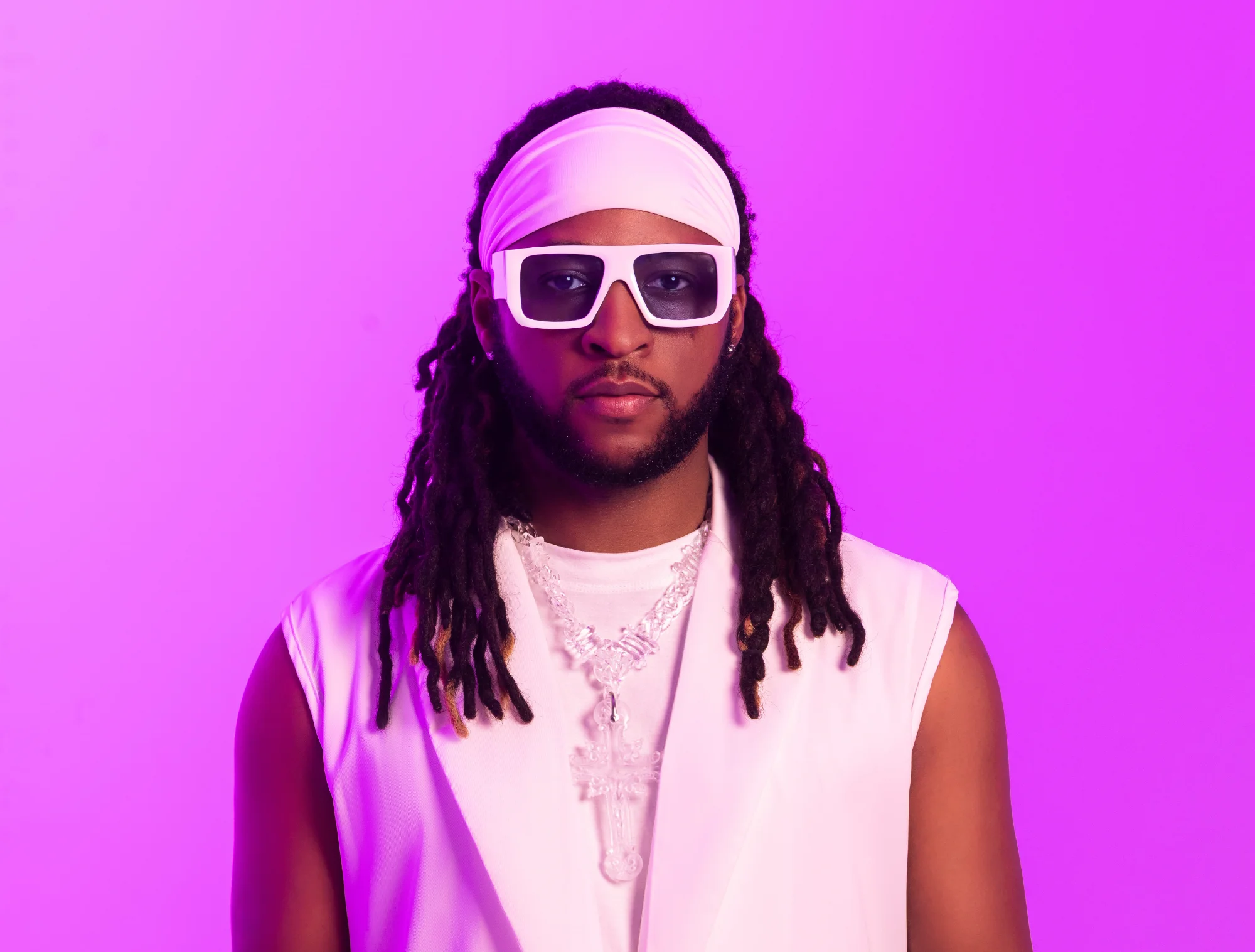
Afrobeat, Amapiano and Sungura guitar out of Harare. Start with the Mavambo EP or the Disemba single.