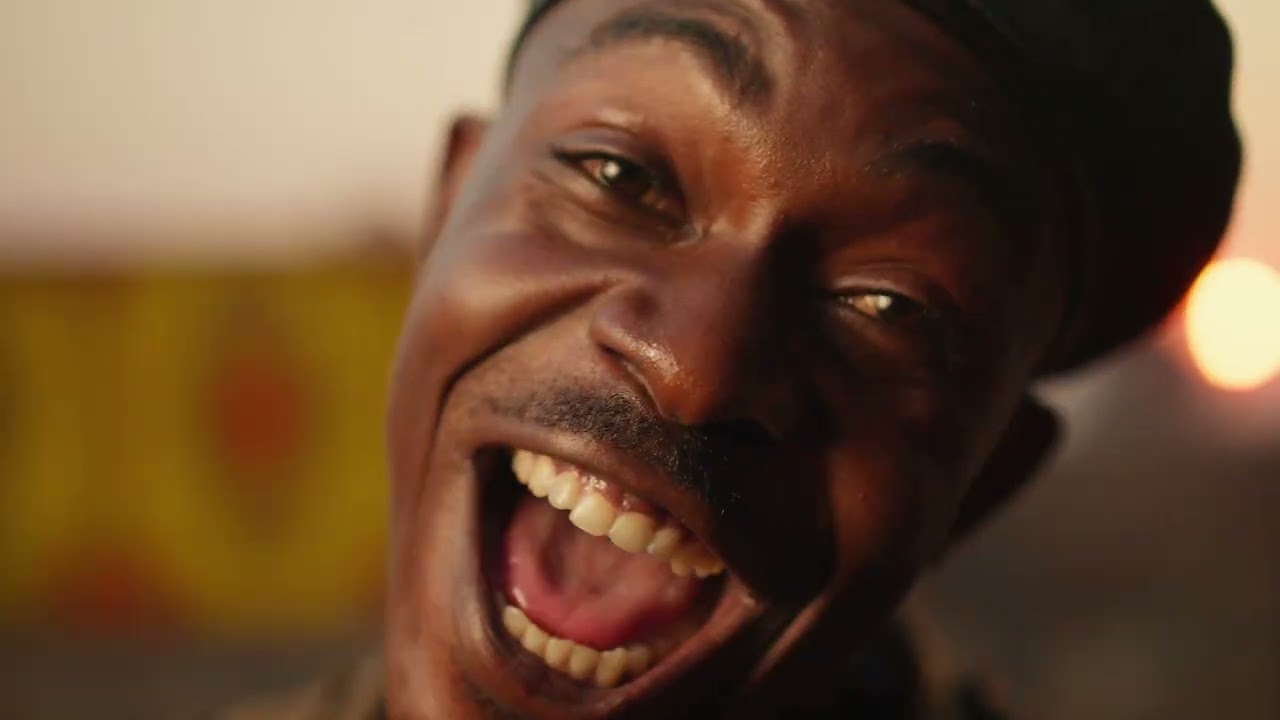
Two Zimbabwean artists get on a train in England, start singing, and a few days later the whole diaspora is arguing about history, manners, visas and freedom. An American conspiracy broadcaster weighs in. And the artist at the centre of it answers the only way a musician should: with music.
This is the Maruza Imi story. I want to go through it properly, because under the jokes and the comment wars it is one of the sharpest pieces of artist positioning Zimbabwe has seen this year.
What Actually Happened
Delroy Shewe and Saintfloew were in the UK for Doek and Slay 2026 on 5 September. On a train into London, coming in from Letchworth, they filmed themselves singing "Maruza Imi Vapambepfumi."
If you did not grow up with it: this is a chimurenga song, the music of Zimbabwe's liberation struggle, carried into modern memory by Cde Chinx. Maruza imi means you have lost. Vapambepfumi means those who take wealth by force. In its original setting it was aimed squarely at the colonial side of the war.
Now put that song in a carriage full of British commuters and you can see why the clip travelled.
Why It Split Zimbabwe
The reaction broke into roughly three camps.
- "Let them express themselves." Two artists abroad, singing their history, harming nobody.
- "Wrong song, wrong place." For others, the choice of a song about colonisers who lost, sung in the former colonial capital, was a message whether they intended one or not. Some made the point that commuters staying quiet is not the same as commuters being comfortable.
- "Think about your visas." The most Zimbabwean worry of all: the fear that something like this could cost them the next trip.
Then it left the family chat. Alex Jones picked the clip up and folded it into his talking points about immigration and who belongs in Britain. At that point it stopped being a Zimbabwean argument and became an international one.
The Ollah 7 Special: Both of Them, Same Couch
On 17 September, DJ Ollah 7 sat them down together for an On the Spot special. It is the best primary source there is on this, so I will lean on it.
Asked why he sang it, Delroy's answer was one line: "Because I am a free man." Then he made his case, and it was more thought through than the memes gave him credit for.
On the lyric: vapambepfumi is someone who takes wealth by force. He pointed out there is no colour in that definition. The coloniser was "the then." It is 2026. Whoever is taking something from you by force today, that is who the word is for, and if nobody on that train was that person, the song was not about them.
On the law: he said he had checked, and that singing on a train in the UK is not illegal unless you are harassing people, begging, or drunk. None of that was happening.
On the visa fear: he was careful. Immigration conversations happen privately in a cubicle, not on a podcast, and he was not going to treat it as a talk-show topic.
On Alex Jones: that was the part he called out as genuinely insulting, an outsider using a clip to disrespect a whole people who had done nothing to him.
And then the line that, to me, is the real thesis: fear is too dominant in the Zimbabwean child. A generation that is scared to sing its own history on a train, he argued, does not really know where it is going.
You do not have to agree with all of that to see what he was doing. He took a clip that was being used against him and gave it a meaning he owned.
Level: A Press Statement You Can Dance To
He had already started before the podcast. On 14 September he released "Level (Press Statement)", framed openly as his musical response to the controversy. It passed six figures of views within days.
The visuals are green, with a raised fist, and people immediately read that as political alignment. On Ollah 7 he rejected that: green is on the flag for vegetation and life, which is what we were taught in primary school, and the fist is resilience, a soldier carrying on. His explanation of the whole concept was that people were trying to take his "gun" away, and his gun is his freedom to express himself.
Whether you buy the symbolism or not, as a move it was textbook. He turned a news cycle into a release.
Maruza Imi: Cashing the Moment
Then came the main event. Also on 17 September, Delroy put out his own performance of "Maruza Imi (Vapambepfumi)." It went past 200,000 views in under a week, and the lyric videos and reaction clips followed straight after.
This is where the talent shows. Anyone can go viral for doing something controversial. Very few people can go viral and then make the thing itself sound so good that the argument becomes the promo. The voice is what turns people who came for the drama into people who stayed for the record. The controversy was the trailer. The song is the film.
So Why Isn't Saintfloew on It?
This is the question everyone keeps asking, because the partnership never went anywhere. Saintfloew was in the clip. He was on the Ollah 7 couch. When they got home, the two of them performed Maruza Imi together on stage. They did the whole press run as a pair. And he had his own moment in the same week, his Okayvember show on 12 September.
But the record that came out of all of it is Delroy's alone.
Neither of them has publicly explained that, so I am not going to pretend to know their private conversations. What I can tell you is why, as a strategy, it makes sense.
- One narrative needs one narrator. "Level" was Delroy's personal statement. "Maruza Imi" is the continuation of that statement. Adding a feature would have turned a clear story, the man they tried to silence answers in song, into a group project.
- Delroy was the voice of the moment. On the train and on the podcast it was Delroy who carried the melody and the argument. The release follows where the public's attention already was.
- Ownership stays clean. This matters more for Delroy than for most. His biggest record, "Superstar" with Saintfloew in 2023, is listed as ℗ NashTv, and he went public on this same podcast in 2024 to say he had not been paid for it. His recent releases no longer carry NashTV on the paperwork. A solo record means one owner and no split to argue about later.
- Saintfloew loses nothing. He gets the shared stage, the shared podcast and the shared headlines, and he keeps his lane for his own projects. The friendship is plainly intact.
Was it a good move? Yes. It would only have been a mistake if it had cost them the relationship, and everything public says it did not. They stand together on the moment and each owns their own catalogue. That is how grown artists do it.
What Every Artist Should Take From This
- Controversy is attention on loan. It will be taken back quickly. Delroy converted it into owned assets inside two weeks: "Level," the podcast, "Maruza Imi."
- Answer in your medium. He did not write a long post. He released a song and called it a press statement.
- Define your words before others define them for you. His vapambepfumi explanation will not convince everyone, but it moved the debate onto his ground.
- Share the stage, own the master. Stand next to your friend in public. Put your own name on the paperwork.
Say what you want about singing on a train. The scoreboard reads: three releases, one of the biggest podcast episodes of the month, and the whole country saying his name.
Watch Maruza Imi (Vapambepfumi), Level (Press Statement) and the full Ollah 7 On the Spot special with both artists.
Watch them. Then tell me in the comments: freedom of expression, or wrong song in the wrong place?

Listen to Teemak
Afrobeat, Amapiano and Sungura guitar out of Harare. Start with the Mavambo EP or the Disemba single.