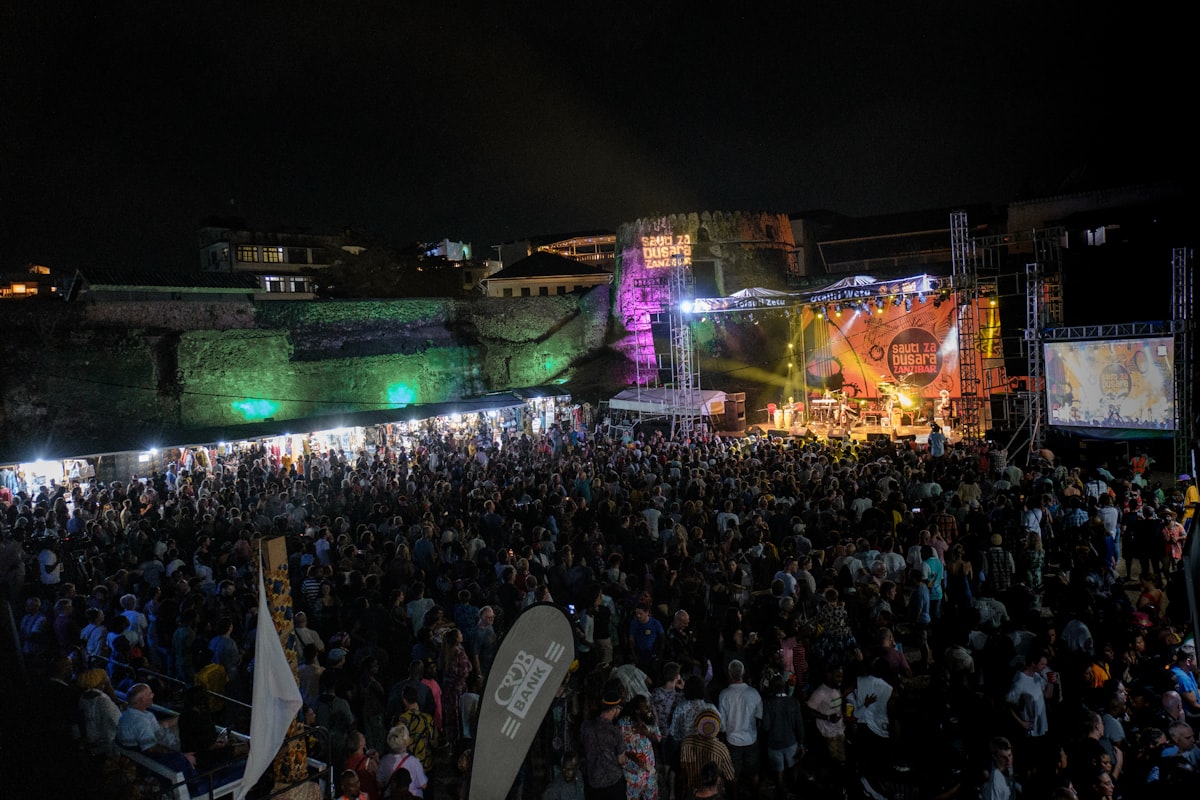
Three years without a truly global Afrobeats hit. Cancelled tour dates across Europe. A-list artists struggling to fill venues they sold out in 2022. Major acts facing criticism for prioritizing vibes over substance. The whispers are getting louder, and this time, they are not coming from outside observers. They are coming from within the industry itself.
Afrobeats is experiencing what many are calling "creative fatigue." And while the genre's obituary is premature, the diagnosis of its current condition deserves honest examination. Because in that diagnosis lies an opportunity. Not just for Nigerian or Ghanaian artists to recalibrate, but for an entirely new voice to enter the global conversation.
That voice could be Zimbabwe.
The Fatigue Is Real
Let me be direct about what I am observing. The criticism is not coming from haters or cultural outsiders. It is coming from Burna Boy himself, who warned the industry about prioritizing trends over artistry. It is coming from producers who watch their instrumentals become interchangeable templates. It is coming from fans who notice that songs no longer have replay value beyond the initial hype.
"A-list artists forgot about the music and started chasing vibes with zero substance. Most songs nowadays no longer have replay value beyond the initial hype. There's a reason why genres from decades ago are gaining more traction than the noise being released lately."
This is not my assessment. This is the sentiment circulating through Nigerian music discourse right now. The conversation has shifted from celebration to introspection.
The numbers tell a story too. Major artists are cancelling international tour dates. Venues that were packed in 2022 and 2023 are struggling to sell tickets in 2026. The frenzied consumption that characterized Afrobeats' global ascent has cooled into something more measured, more selective.
Some argue this is normal market correction. Every genre experiences cycles. But there is something deeper happening here, something worth understanding if you are an African artist watching from the sidelines.
The Formula Became the Prison
Afrobeats conquered the world by being authentically African. That is the irony. The genre broke through because it offered something the global market had not heard before: a distinct sonic identity rooted in Lagos clubs, in West African rhythms, in a particular swagger that could not be replicated elsewhere.
But success bred imitation. Once the formula worked, everyone chased it. The same production templates. The same flows. The same topics: money, parties, romantic flexing. What started as authentic expression calcified into a checklist.
The genre that broke barriers by being different is now struggling because everything sounds the same.
This is not unique to Afrobeats. American hip-hop went through similar cycles. So did EDM. Any genre that achieves mainstream success faces the tension between innovation and repetition. The artists who defined the sound want to evolve. The market wants more of what worked. Labels push for proven formulas. Creativity gets squeezed out.
The difference with Afrobeats is that its global moment is still relatively young. The genre does not have decades of established infrastructure to fall back on. If the creative engine stalls now, the consequences could be more severe than a temporary dip in chart positions.
What the Critics Miss
Before I continue, I need to acknowledge something. The "Afrobeats is dying" narrative is overblown. The genre is not collapsing. Burna Boy still fills stadiums. Wizkid still charts globally. Tyla won a Grammy. Rema's collaboration with Selena Gomez has over two billion streams on Spotify.
Afrobeats is not dying. It is evolving. And evolution is uncomfortable.
What we are witnessing is not the death of a genre but the growing pains of an industry that scaled faster than its infrastructure could support. Nigerian artists achieved global recognition before Nigerian music business practices caught up. The streaming revenue models, the touring infrastructure, the sync licensing pipelines: these are still being built.
The criticism about creative fatigue is valid. But so is the recognition that Afrobeats has fundamentally changed how the world consumes African music. That door, once opened, does not close.
The Opportunity in the Chaos
Here is where I shift from observer to participant. Because I am not writing this as a journalist analyzing trends. I am writing this as a Zimbabwean artist who has been watching, waiting, and preparing.
When a dominant sound experiences fatigue, listeners start looking for alternatives. Not replacements. Alternatives. The appetite for African music has been created. The infrastructure for global distribution exists. The cultural curiosity is there. What changes is the specific sound people are seeking.
This is exactly what happened when Amapiano emerged. South Africa offered something different: deeper, more hypnotic, built on log drums and bass patterns that felt fresh against the Afrobeats template. The world embraced it not as a replacement but as a sibling. A different expression of African creativity.
Now ask yourself: what else is out there? What other African sounds have not yet been properly introduced to global audiences?
Enter Zimbabwe
Zimbabwe has zero Grammy nominations in the African music category. Zero BET nominations. Our most celebrated international success remains Oliver Mtukudzi, who passed away in 2019. When global platforms celebrate African music, Zimbabwe watches from the sidelines.
This is not because we lack talent. Winky D commands stadiums across Southern Africa. Jah Prayzah recently became the first Zimbabwean artist to reach two million Spotify streams in under a year. Gemma Griffiths earned a Rolling Stone Africa cover. Holy Ten is redefining Zimbabwean hip-hop. The talent is undeniable.
What we lack is a globally packaged sound. An exportable identity that the world can grasp and embrace the way it embraced Afrobeats and Amapiano.
But we have the raw material. We have Sungura.
The Sungura Advantage
Sungura is the most popular genre in Zimbabwe. It emerged after independence in 1980, blending traditional Shona music with Congolese rumba and Western influences. The name means "rabbit" in Shona, reflecting the music's agile, lively character.
At its core, Sungura is built on sophisticated guitar interplay. Lead and rhythm guitars dance around each other in patterns that are instantly recognizable to any Zimbabwean but completely fresh to international ears. The basslines carry weight and groove. The rhythms are complex but accessible.
This is not traditional music frozen in amber. Sungura has evolved continuously. Artists like Alick Macheso, the "King of Sungura," have pushed the sound forward while maintaining its essential character. A new generation, including Mark Ngwazi, Peter Moyo, and Simon Mutambi, is carrying the tradition into new contexts.
Now imagine this foundation fused with contemporary production. Sungura guitar patterns meeting modern 808s. Traditional rhythms layered with Amapiano log drums. Shona vocals riding waves of bass that hit global streaming algorithms.
The world has not heard what Zimbabwe sounds like. That is not a weakness. It is an opportunity.
Beyond Sungura: The Full Palette
Sungura is not our only resource. Zimbabwe's musical heritage runs deep.
Chimurenga: The politically conscious music pioneered by Thomas Mapfumo, built on mbira patterns and resistance lyrics. In an era where global audiences increasingly value music with meaning, Chimurenga's DNA offers something Afrobeats' party-focused mainstream does not.
Mbira: The ancient thumb piano music that predates colonialism. Artists like Stella Chiweshe brought mbira to international stages decades ago. The instrument's hypnotic, meditative qualities could find new audiences in an era hungry for authenticity.
Zimdancehall: Our own take on dancehall, with Winky D at its peak showing how the genre can carry substance alongside energy.
The point is not that any single genre will break through. The point is that Zimbabwe has a depth of musical tradition that has barely been tapped for global consumption. We are sitting on resources that the world does not know exist.
What Must Change
I am not naive about the challenges. Zimbabwe faces real obstacles that Nigeria and South Africa do not.
Our economic conditions make international transactions difficult. Receiving streaming revenue requires navigating banking systems that were not built for creative industries. Many artists cannot afford proper studio time, let alone international marketing campaigns.
Our infrastructure lags behind. Internet access remains expensive. Data costs limit how much artists can engage with digital platforms. The tools that enable global distribution are out of reach for many.
Our industry knowledge is underdeveloped. Understanding contracts, royalties, sync licensing, audience building: these skills are not widely taught. Artists learn through costly trial and error.
These are real problems. But they are not insurmountable. And the artists who figure out how to navigate them will have first-mover advantage when Zimbabwe's moment arrives.
The Template Already Exists
Look at what South Africa did with Amapiano. The genre emerged from townships, built by producers who were not waiting for permission from international gatekeepers. It spread through local taxi culture before streaming platforms noticed. By the time global audiences discovered it, the sound was fully formed, the community was established, and the artists were ready.
Nigeria did something similar with Afrobeats. The infrastructure was built locally first. The sound was refined in Lagos clubs before it conquered London and New York. International success came after domestic dominance, not before.
Zimbabwe needs to follow this template. Build the sound at home. Refine it. Create a community around it. Then export it.
This is already happening. Artists across Zimbabwe are experimenting with fusions that blend traditional elements with contemporary production. The conversation about what "Zimbabwean global music" sounds like is happening in studios right now. The work is being done.
My Role in This
I did not write this article as a detached observer. I wrote it as someone actively working toward the future I am describing.
Every track I produce through Lord Empire Music is an experiment in what modern Zimbabwean music can sound like. When I blend Sungura guitar with Amapiano production, I am not abandoning either tradition. I am creating a bridge. When I write lyrics in Shona over contemporary beats, I am testing whether our stories can translate across cultures.
The album I am building, "Mavambo" (which means "beginnings" in Shona), is designed as a proof of concept. Can music rooted in Zimbabwean identity connect with listeners who have never been to Harare? Can our rhythms, our stories, our sounds compete on global platforms?
I believe they can. But belief is not enough. The work has to prove it.
The Call to Action
This article is not just analysis. It is an invitation.
To Zimbabwean artists: the door is opening. Afrobeats' creative fatigue means global ears are seeking fresh sounds. Our heritage is rich, our talent is real, and the tools for global distribution are more accessible than ever. The question is whether we will be ready when the moment comes.
To producers: study what makes Sungura guitar patterns unique. Learn the mbira scales. Understand Chimurenga's rhythmic foundations. Then fuse them with whatever contemporary sounds move you. The innovation will come from experimentation, not imitation.
To the diaspora: you are the bridge. Zimbabweans in London, New York, Johannesburg, Dubai: you carry our sounds into new contexts. Your support, your sharing, your presence at shows creates the visibility that opens doors for artists at home.
To anyone listening: pay attention. Zimbabwe's moment is not a distant dream. The artists are working. The sounds are evolving. The foundation is being laid.
The Throne Is Not Empty
Let me be clear about something. I am not predicting Afrobeats' demise. The genre will adapt, evolve, and likely remain a dominant force in global music for years to come. Nigerian artists have too much talent, too much momentum, and too much infrastructure to simply fade away.
But the throne has room for more than one seat. The African music category at the Grammys does not have to be dominated by two countries forever. The global appetite for African creativity is large enough to embrace diversity.
Zimbabwe does not need Afrobeats to fail. Zimbabwe needs to build something compelling enough to stand alongside it.
That is the work. That is the opportunity. That is what I am committed to.
The world will hear Zimbabwe. Not because Afrobeats declined, but because we finally stepped up.
This is my commitment as an artist, as a producer, and as a Zimbabwean. This is what I, Taona Oswald Chipunza, am building through Lord Empire Music.